'Riches Are in the Niches' Is a Cliché Until You See This: A Graveyard Market Nobody Else Serves
Everyone repeats riches are in the niches without saying what it means. A r/passive_income case study makes it concrete: one person makes replacement parts for discontinued products, wheelchairs, ebikes, machines whose makers vanished. The customers are already searching for the exact broken part. Distribution is nearly free. Here's the real meaning of riches in the niches, why a graveyard market works, and the pricing fight that shows what you're actually selling.
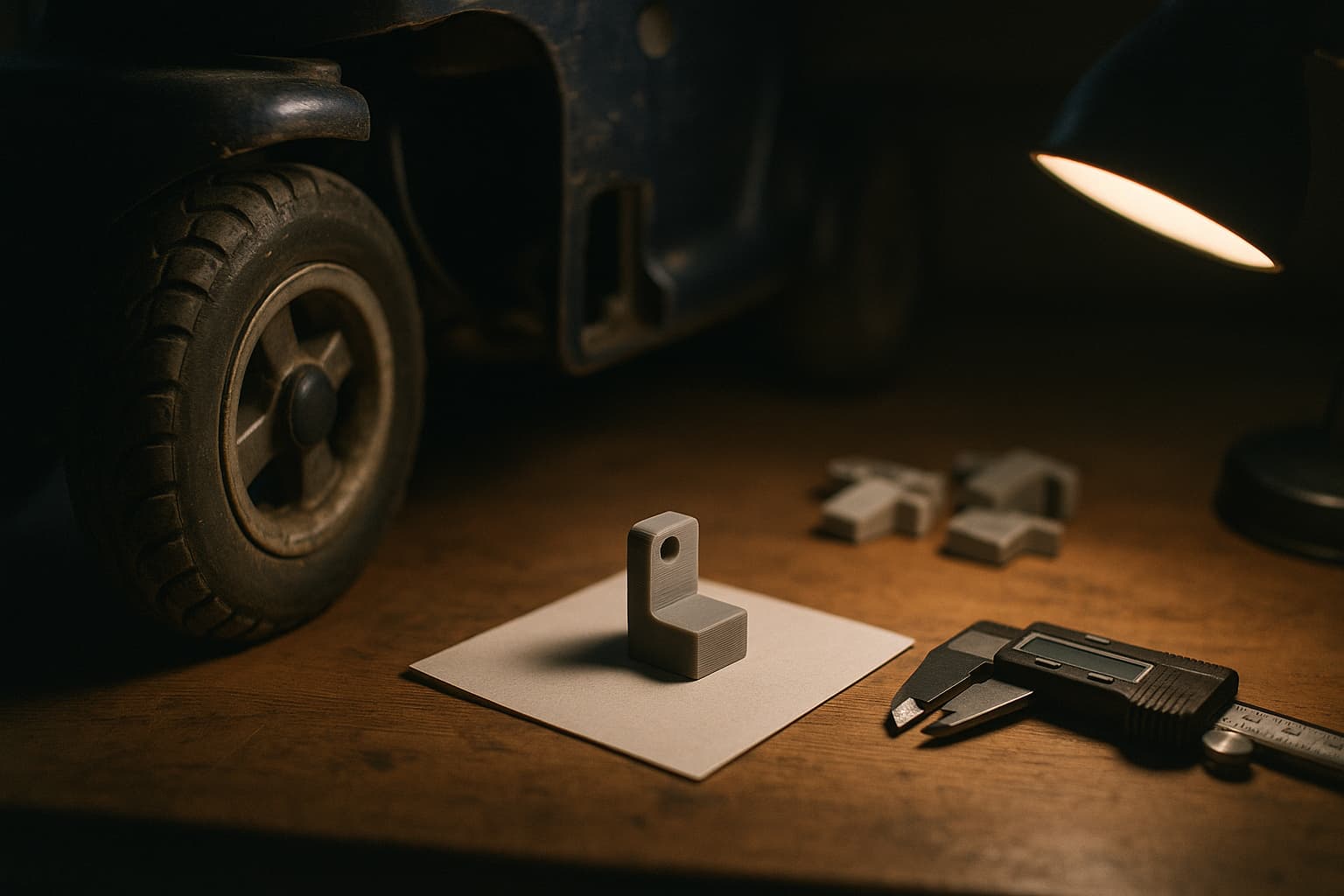
"The riches are in the niches" is one of those phrases that gets repeated until it stops meaning anything. Alex Hormozi says it, every business podcast says it, and the person who just heard it nods and still has no idea what to actually do. So when someone on r/passive_income posted a small case study under that exact tired headline, it was worth reading, because for once the phrase came with a mechanism.
Here's what they do. They make replacement parts for products that have been discontinued or whose manufacturers went out of business. A plastic housing on a mobility scooter. A controller mount on a wheelchair. A component that kills a $1,000 ebike when it fails. The original maker is gone, no official part exists, and the owner is facing throwing out an otherwise working machine over one small broken piece. They design and produce the replacement, and they make an extra several hundred dollars a month doing it.
That is what "riches in the niches" actually means when it's real. Not a small audience. An abandoned one.
Why a graveyard market works
The best comments gave the pattern a name. One called it a textbook orphaned-product gap: the manufacturer disappears, but the installed base remains, and official support never comes back. Another called it a graveyard market, the manufacturer is gone but the customers never left. That's the whole engine.
Think about what's true in a market like that. Demand already exists and isn't going anywhere, because people own the dead product and want to keep it. Supply has collapsed to roughly zero, because the maker quit and nobody big will bother with a market this small. And the customer's alternative is expensive, throwing out the whole machine, so the value of a cheap fix is high relative to its cost. You are not creating demand or fighting for it. You are capturing demand that was orphaned when its supplier walked away.
The top reply was itself a live example of finding one. Someone whose father uses a wheelchair described abandoning two otherwise-working machines because the controller housing failed and nobody would repair or replace it. That's not a hypothetical customer. That's a person telling you, unprompted, exactly what they'd have paid to fix.
The customers are already searching for you
Most "find a niche" advice dies on distribution. You pick the narrow thing, and then you still have to figure out how anyone finds it. A graveyard market quietly solves that, and the case study is blunt about it.
How do people find them? It's literally just a few posts on old forum threads that come up when you search for that exact part malfunction. They get a few emails a week from people asking. No ads, no funnel, no content treadmill. Someone's espresso machine or treadmill or RV slide-out breaks, they search the specific failure, and the search leads to the one person who makes the fix.
That's the part worth internalizing. In a graveyard market, the customer already knows precisely what they need and types it into a search bar. You don't have to interrupt anyone or manufacture interest. You have to be the result that shows up when someone searches for a discontinued part by name. One commenter pointed at the deeper vein here: old forum threads are the gold mine, discontinued scooters, treadmills, espresso machines, RV parts, pool equipment, anywhere one plastic bracket or control cover kills the whole unit.
The pricing fight, and what you're really selling
The thread also had a fight, and the fight is the most useful part. Someone objected that charging $55 for a small part was too much for what looked like a couple dollars of material.
The replies took that apart. You are not paying for the plastic. You are paying for machine time, overhead, and most importantly the expertise that designed a working repair for a part nobody else supports. The maker said it took roughly 40 hours of design and around 50 prototypes to get right, and that they hand-build some components and physically walk each order to the mailbox. One commenter did the math the other way: aerospace engineering time bills at $220 an hour, and eight minutes of that plus materials already clears $30, for someone spending their own time to solve a problem the market abandoned.
And the cleanest rebuttal to "that's overpriced" was one line: don't want to pay the markup, figure it out yourself. If it were genuinely overpriced with easy alternatives, the reviews and the empty inbox would say so. Instead there's a steady trickle of grateful buyers whose $1,000 machine got saved for $55. The material cost is the smallest number in the whole equation. What's actually being sold is the design and the willingness to serve a market too small and too unglamorous for anyone else to touch.
That last part is also the moat. A niche stays yours precisely because it isn't worth a bigger player's attention. The riches are in the niches not because small is magic, but because small, abandoned, and specific is where you get to be the only supplier to customers who are already looking for you.
FAQ
What does "riches are in the niches" actually mean? It means a narrow, specific market often pays better than a broad one, because you face little competition and can serve a clear need precisely. The strongest version, shown in this case study, is an abandoned market: demand that still exists after its original supplier left, where you can become the only source.
What is a graveyard market? A market where the manufacturer is gone but the customers remain, stuck with a product they can't get parts or support for. Discontinued mobility devices, dead-brand appliances, unsupported electronics. Demand persists, supply has vanished, and a small maker can step into the gap.
How do I find a profitable niche like this? Look for products where one cheap component failing kills an expensive machine and the maker no longer supports it. Search old forum threads and repair communities for people describing the exact failure. If people are already asking "did anyone ever fix this," the demand is proven and already searching.
How should I price a made-to-order part or repair? By value and expertise, not material cost. Factor in design time, prototypes, machine time, overhead, and fulfillment, then anchor to what it saves the customer, who would otherwise replace the whole product. The grams of material are the smallest part of what they're paying for.